

-
About
-
Outcomes
-
Conference
-
Events
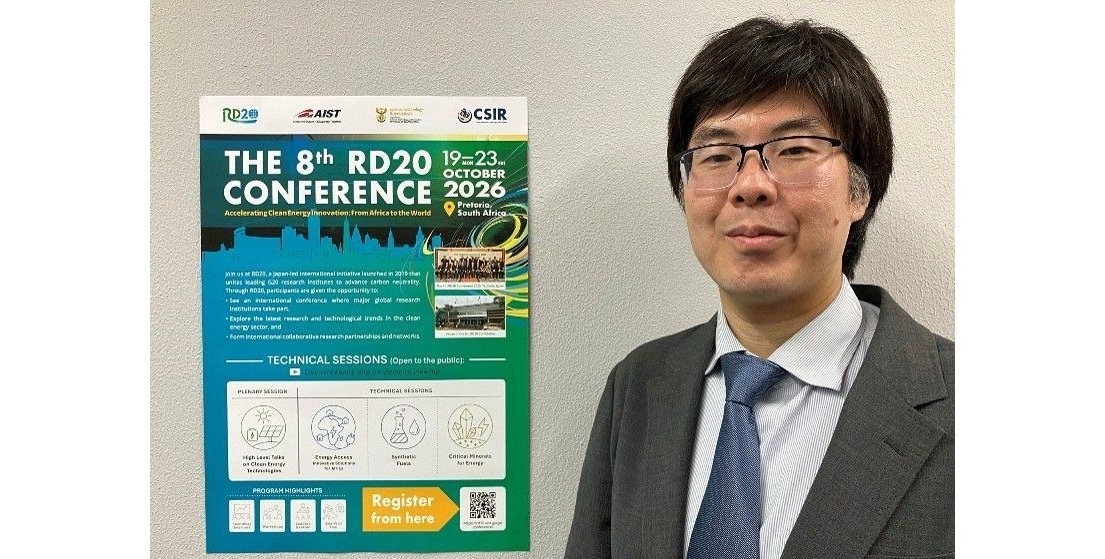
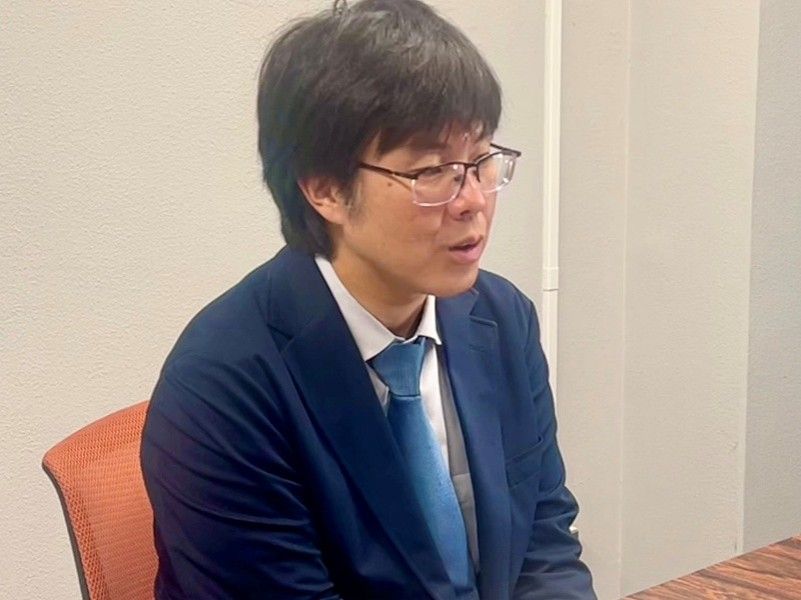
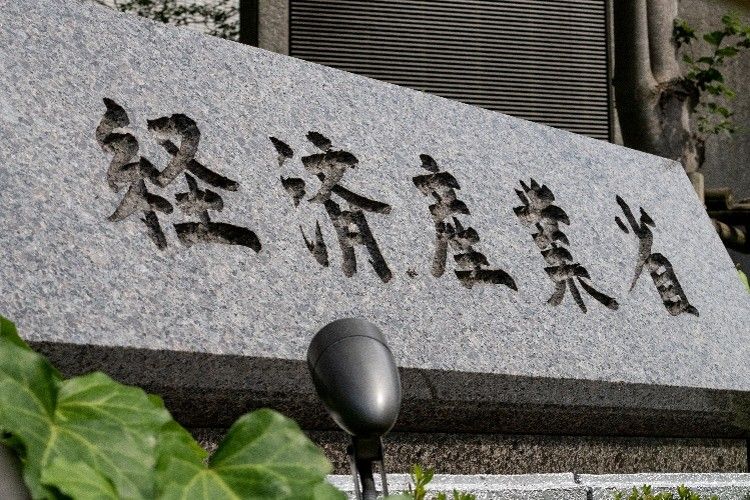
Now in its eighth year, RD20 began as a Japan-led conference bringing together research institutions from G20 countries and regions to discuss the path to carbon neutrality. Since then, it has grown beyond a conference held only in Japan into a broader international platform. Initiatives now include summer schools that foster networking among early-career researchers and year-round task forces tackling key issues. Together they are creating new connections for researchers and helping build international networks. This year’s RD20 will be held in South Africa. To learn more about this year’s objectives, we spoke with Mr. Hiroki Watanabe (Director, International Affairs Office, International Cooperation for Standards and Conformity Assessment, Innovation and Environment Policy Bureau of METI – Ministry of Economy, Trade and Industry – ).
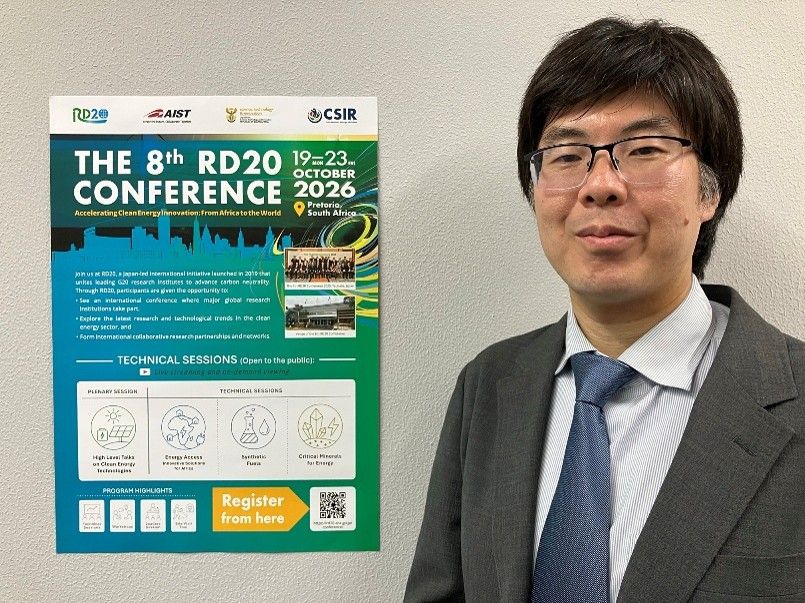
This year’s RD20 will be hosted by the CSIR (Council for Scientific and Industrial Research) in Pretoria, the capital of South Africa. The country also chaired the G20 last year and led the Energy Transitions Working Group (ETWG). CSIR is also the only RD20 member institution on the African continent and is actively working on energy transition and clean energy.
CSIR’s activities were previously featured in this interview series on August 17, 2023 (see Reference 1). When RD20 invited countries other than Japan to host, CSIR of South Africa stepped up as a candidate. METI was already familiar with its efforts, and with support from other members, South Africa was selected as host.
Africa’s particular strength lies in its abundant renewable energy and critical mineral resources, combined with strong prospects for population growth and economic growth. At the same time, the region faces challenges such as improving energy access and building a sustainable industrial base. Mr. Watanabe said the aim is to share technologies and expertise from new perspectives to promote talent development, including in Africa, and foster new international partnerships. That ambition is captured in this year’s theme: “Accelerating Clean Energy Innovation: From Africa to the World.”
Although Japan will not host the RD20 event this year, METI’s Innovation and Environment Policy Bureau will hold two forums related to clean energy. One is a September workshop on the Carbon Dioxide Removal (CDR) Mission, part of the international Mission Innovation framework. The other is the Annual Meeting of ICEF (Innovation for Cool Earth Forum) in October, an international conference co-hosted by METI and NEDO (New Energy and Industrial Technology Development Organization). With rising geopolitical tensions, energy security has become a more important theme and is expected to be on the agenda.
Has METI’s role in RD20 changed as the international environment undergoes major shifts, including on the geopolitical front? On this, Mr. Watanabe said, “At RD20, AIST (National Institute of Advanced Industrial Science and Technology) has steadily led the operations as a research institution. That will not change. A unique gathering like RD20, built on a network of research institutions, provides a valuable foundation for continuing research collaboration even as the international situation changes, and we intend to preserve it.”
RD20 was initially described as operating with one leading national lab per country, but recently participation has not necessarily been limited to one institute. For example, Germany participates through Fraunhofer ISE (Institute for Solar Energy Systems), and since last year, Helmholtz-Zentrum Berlin (HZB) of the Helmholtz Association has also joined. Has the policy changed?
Mr. Watanabe said they do not consider one institute per country to be a strict rule. Japan already has multiple participants: AIST, RIKEN and NIMS (National Institute for Materials Science). France also participates through both CEA (French Alternative Energies and Atomic Energy Commission) and CNRS (French National Centre for Scientific Research). Describing this evolution, Mr. Watanabe said, “We are no longer in an era when a single institute can cover every technology field. I think it is better for various institutions to take part and together cover a broad range of fields.”
The more institutions that take part, the more opportunities there are for networking, especially among early-career researchers. It also brings new perspectives to the task forces. “What matters is the level of commitment each institution brings to RD20 and whether it can contribute on an ongoing basis. Membership expansion and the future direction of RD20 must therefore be pursued on the basis of consensus among all participating institutions,” Mr. Watanabe emphasized.
“Energy issues do not have to be addressed only by energy specialists. They can also be tackled with AI or quantum technologies. AI for Energy and Quantum for Energy are tools, so it is natural for energy researchers to use them. As a clean energy forum, RD20 can and should embrace collaboration with other fields and bring in technologies from outside the energy sector. If new fields join and enrich the task forces, it could lead to future international joint research projects. That could eventually broaden participation beyond researchers from G20 countries and regions, and it is important to discuss this,” he said.
Going forward, AI could play a major role in solving energy problems, so along with AI for Energy, the concept of Energy for AI may also be needed.
Beyond AI, when it comes to implementing technology, participation from countries like Singapore, where technology and business are closely linked, would be valuable. The question of which countries and institutions should participate will likely remain under discussion even after next year’s meeting in Tokyo.
The greatest hope for this year’s meeting in South Africa is, naturally, network building. Holding it in South Africa should also make it easier for participants from other African nations to take part. Mr. Watanabe also hopes the AI for Energy workshop will be upgraded to a full task force this year. He hopes this will be discussed and agreed upon at the meeting. If RD20 evolves into international joint research, its significance will be even greater.
Reference
1. “Looking Forward to Collaborations in Green Hydrogen That Leverage South Africa’s Strengths,” Special Interview, RD20 website (August 17, 2023)
https://rd20.aist.go.jp/interview/2023/0817/
Kenji Tsuda, Editor in Chief, Semiconductor Portal