

-
About
-
Outcomes
-
Conference
-
Events
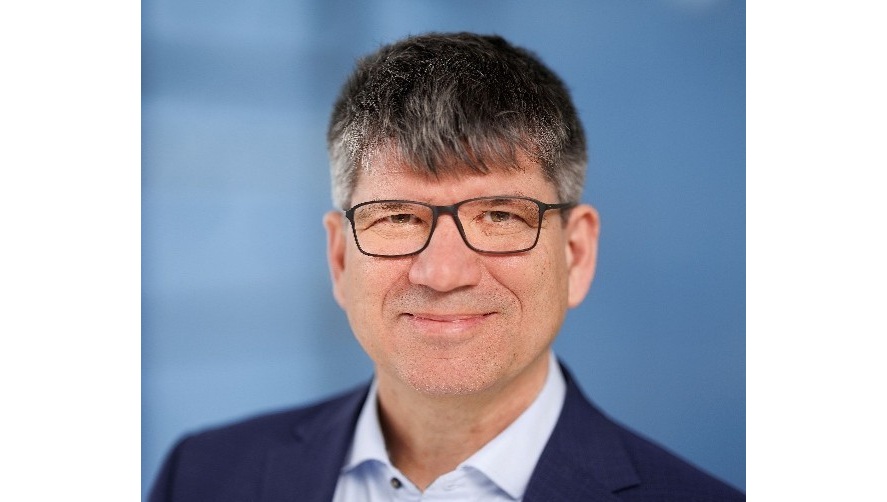
The Helmholtz Association, Germany’s largest research organization, comprises 18 research centers and employs approximately 48,000 people. One of those centers, Helmholtz-Zentrum Berlin (HZB), became an RD20 member in 2025. HZB is developing new materials and technologies to support the future supply of energy without contributing to climate change. Home to the BESSY II synchrotron radiation facility, which enables researchers to probe the properties of matter, the institute attracts scientists from around the world. We spoke with Prof. Dr. Bernd Rech, scientific director of HZB, about the institute’s research activities and its expectations for RD20.
HZB, Helmholtz-Zentrum Berlin for Materials and Energy, has around 1,500 employees and conducts research in seven fields: photon science, photovoltaics, green hydrogen and sustainable fuels and chemicals, batteries, quantum and functional materials, accelerator research, and energy systems. “In areas related to RD20, we have contributed to research on advanced energy materials and state-of-the-art characterization using large-scale research infrastructure such as the BESSY II synchrotron radiation facility,” says Prof. Dr. Bernd Rech.
HZB also focuses on materials for next-generation photovoltaic devices such as perovskites, battery materials including lithium-sulfur and sodium-ion batteries, hydrogen technologies, and carbon-neutral fuels.
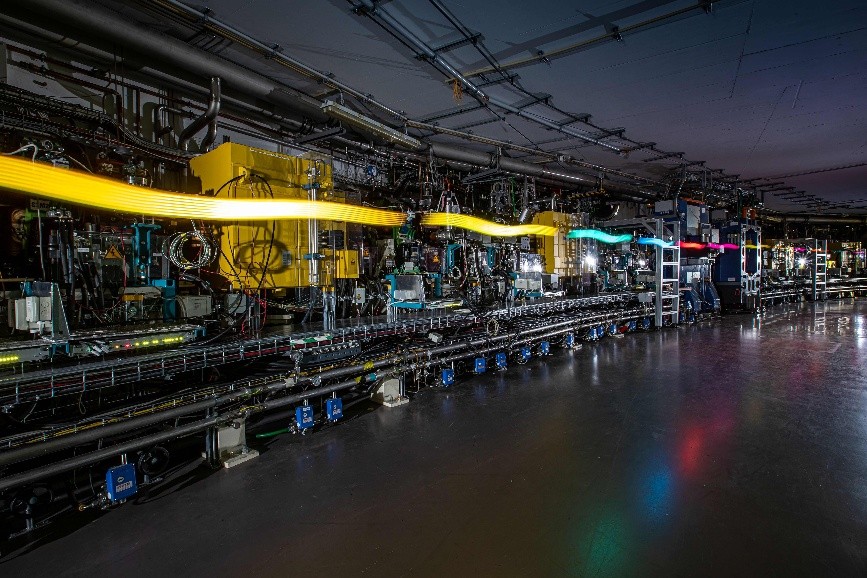
An indispensable tool for developing and characterizing these new materials is a synchrotron radiation facility. These facilities irradiate materials with X-rays and analyze their structures through X-ray diffraction and scattering. They also perform spectroscopic analysis, obtaining information on electronic states and bonding states from the wavelengths of X-rays absorbed and emitted by the material. X-rays are generated when electrons are accelerated and rapidly bent by a magnetic field, producing high-energy brilliant light. SPring-8 in Hyogo Prefecture is a similar synchrotron radiation facility in Japan.
HZB’s BESSY II synchrotron radiation facility produces soft X-rays, making it particularly strong in spectroscopic analysis rather than analysis of crystal structures. It can provide information such as chemical bonding states and elucidate what is happening in materials. For example, many researchers come from overseas to study the stability of sodium-ion batteries. Other users study semiconductor interfaces in solar cell materials.
HZB has developed operando techniques for measuring the properties of materials while they are operating. It also uses AI to identify and conduct material experiments, helping to accelarate the development of new materials.
“Let me give you one example of an AI-based initiative. On June 11th 2026, we launched an research project that will use high-throughput screening to develop new catalysts. AI tools will be used to accelerate the evaluation process and predict the next steps to take. The project is being carried out in collaboration with multiple partners. Key partners include the Fritz Haber Institute of the Max Planck Society and Technische Universität Berlin. We are also working with industry partners, including major companies such as BASF and Siemens Energy, as well as deep tech startup Dunia Innovations,” says Prof. Dr. Rech.
While advancing materials research and development, HZB also provides access to its synchrotron facility for a broad international community of researchers. Its close collaboration with partners both within and beyond Europe reflects the spirit of RD20. For example, HZB is conducting joint research with the University of Cape Town on sustainable aviation fuels and environmentally friendly cooking gas. Coincidentally, the next RD20 conference will be held in South Africa, and HZB hopes this will further strengthen its ties with local partners.
HZB has used BESSY II to investigate the structural properties of proteins and is also leveraging AI to accelerate the discovery of new materials needed for clean energy technologies. Countless materials remain to be discovered. One area of current research is the development of organic materials for redox flow batteries, and HZB has high expectations that AI will help uncover entirely new materials that are still unknown today.
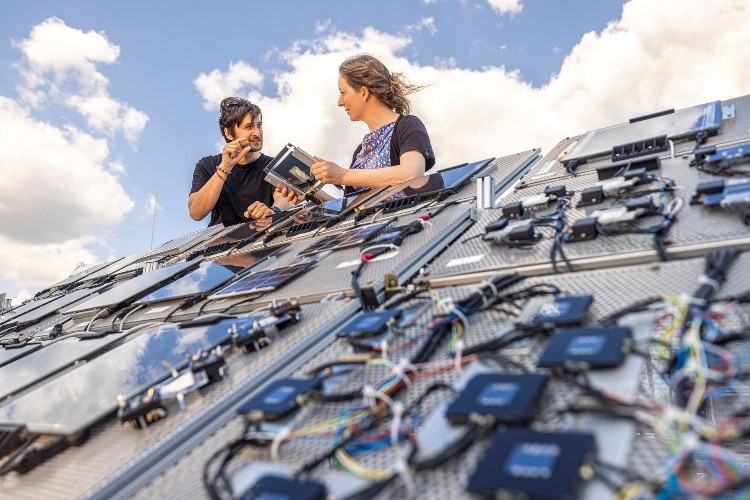
HZB is focusing on highly efficient perovskite solar cells. Its work covers not only perovskite materials themselves, but also tandem solar cells combining perovskite films with silicon, as well as perovskite-based multi-junction solar cells. However, perovskite solar cells face the issue of degradation during long-term use. To overcome this, the institute has begun testing and evaluating their stability in outdoor use. In fact, more than four years have passed since perovskite solar cells were installed on the roof of the institute, making this one of the longest-running field tests of its kind in the world.
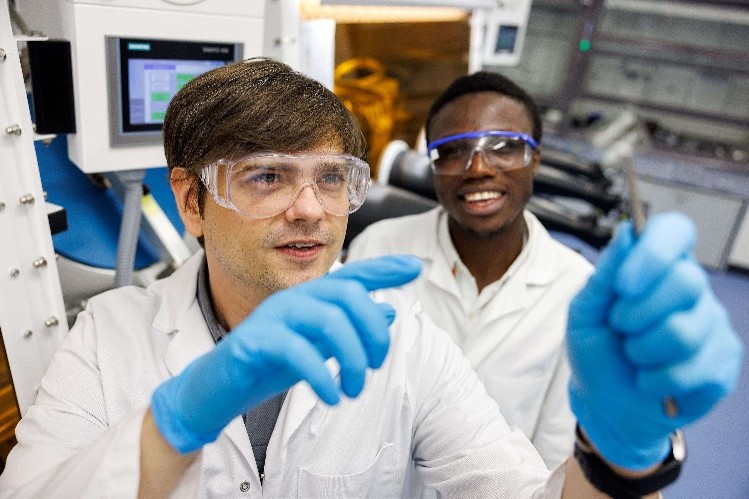
Prof. Dr. Rech believes that the stability of perovskite solar cells will be a key topic from next year onward. HZB is working to separate and resolve the causes of instability, distinguishing between instability inherent to perovskite cells themselves and instability at the interface with encapsulation materials.
Prof. Dr. Rech also has high expectations for RD20. “RD20’s greatest strength is that it connects leading research institutes around the world and enables them to share the common goal of achieving carbon neutrality through science and innovation. That is where its greatest value lies,” he says. He also notes that RD20 brings together world-class research institutes and motivates them to take ideas back to their own countries and contribute to the planet as a whole. “RD20 is also a platform where researchers can share knowledge and make research infrastructure known and available to all,” says Prof. Dr. Rech.
The platform also offers a valuable opportunity to demonstrate the impact that can lead to scientific discoveries. The key is collaboration, combined with the use of AI to narrow down candidate materials and accelerate development.
Prof. Dr. Rech says, “What I expect from RD20 is robust exchange with researchers and participating members from around the world, followed by joint research with organizations such as the National Institute of Advanced Industrial Science and Technology (AIST). I have maintained a long-standing partnership with Dr. Michio Kondo for more than 20 years. In the United States, we also have ties with the former National Renewable Energy Laboratory (NREL), now the National Laboratory of the Rockies (NLR). When I attended RD20 in Japan last year I saw it as an opportunity to strengthen cooperation with HZB. We can gain valuable insights from the RD20 conference, and we would also like to provide valuable information from our institute. Martin Keller, former director of NREL, who worked with Dr. Kondo to run RD20 for many years, is now president of the Helmholtz Association.”
“I am not yet sure whether I will be able to attend RD20 this year, but I would like to send one of our researchers to the host country, South Africa. As I mentioned earlier, HZB is engaged in joint development with research institutes and universities in South Africa, as well as companies such as Sasol. Topics include sustainable aviation fuels, such as SAF, and research with Sasol, a global energy and chemical company, on the development of new catalysts. We recently discussed the theme of our presentation at RD20 this year, and we are considering speaking about the Green QUEST project in terms of joint development with partners in South Africa. This is research on the development of sustainable cooking gas for household use. Expanding the use of cleaner cooking gas is important for both the global climate and people’s health.”
Kenji Tsuda Editor in Chief, Semiconductor Portal