

-
About
-
Outcomes
-
Conference
-
Events
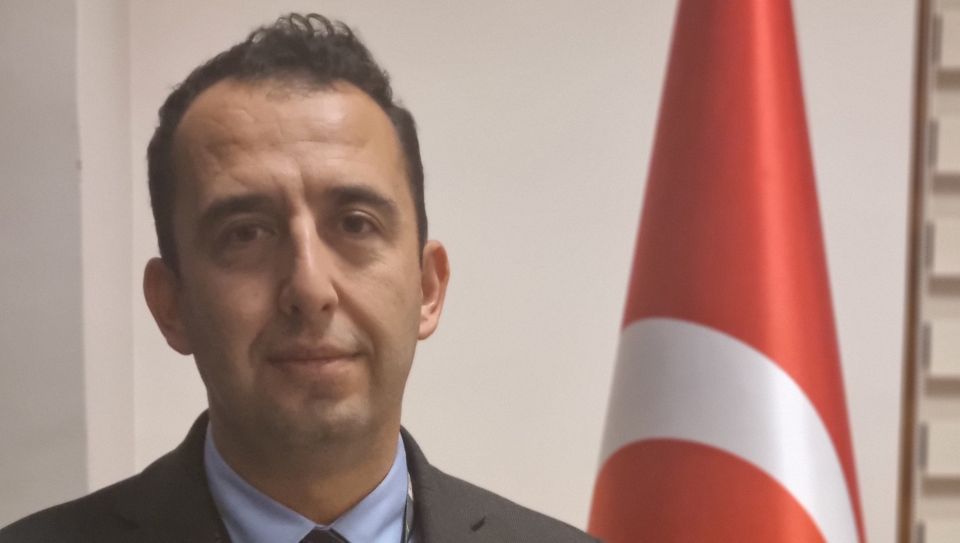
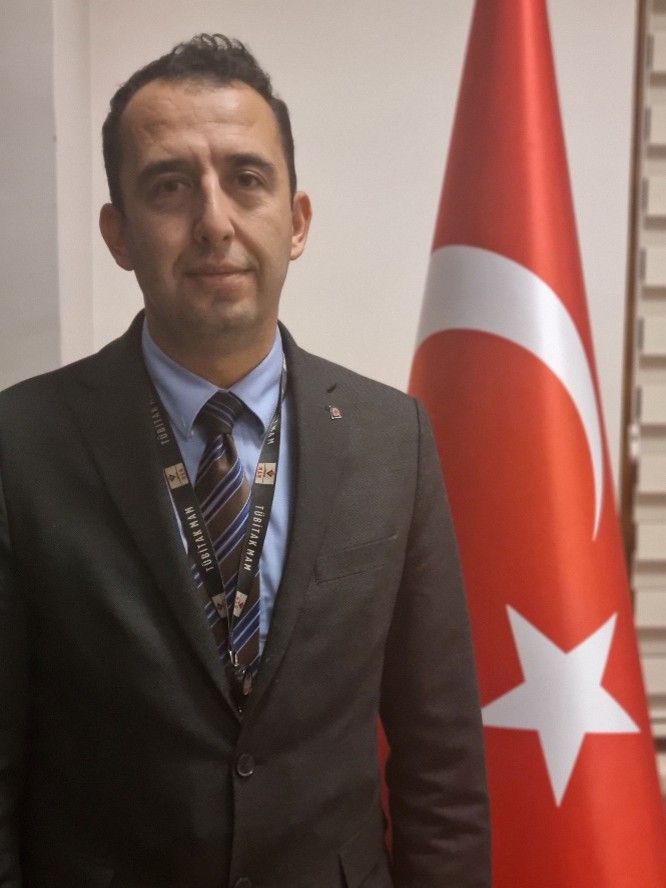
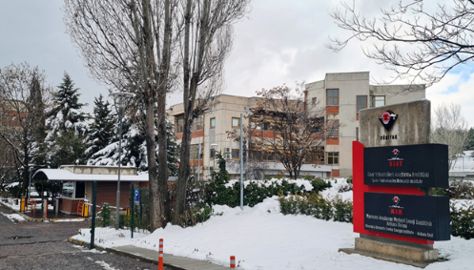
Tubitak (The Scientific and Technological Research Council of Türkiye), Turkey’s largest public research organization, conducts research and development while also playing a vital role in supporting scientific research and technological innovation. Tubitak comprises seven research institutes that study sustainable, carbon‑neutral energy. The Tubitak Marmara Research Center (MAM) is one of these seven research institutes. Dr. Dogan Gezer, the coordinator representing the Energy Technologies Division at Tubitak MAM, is an electrical and electronics engineer and a specialist in renewable energy and hydropower technologies. We spoke with Dr. Dogan Gezer about the center’s activities and his expectations for RD20.
Tubitak is not the kind of research institute that simply writes and publishes scientific and technological papers, Dr. Gezer explains. He says that their goal is to convert research outcomes into practical technology. He emphasizes that their goal is to transform research results into tangible technology that can be used by industry, contributing to national energy policy and ultimately generating economic value.
He notes that today’s energy landscape has evolved to require expertise across a wide range of fields. Energy issues are no longer purely matters of electrical, electronic, or mechanical engineering. Instead, the era now demands knowledge drawn from diverse areas, including artificial intelligence (AI), power electronics, materials science, chemistry, hydrogen technologies, digital systems, and cybersecurity. Dr. Gezer stresses that they must build their own research ecosystem and work together with others to solve these challenges.
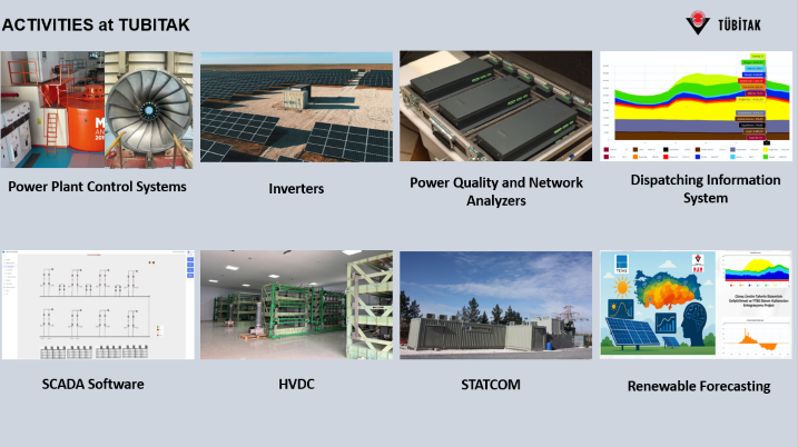
The first theme is renewable energy and grid integration, carried out by the Renewable Energy and Grid Integration team, one of four teams within Dr. Gezer’s Energy Technologies Division. As renewable energy becomes more widespread, power fluctuations increase and grid management grows more complex. To address this, the team develops reliable technologies that enhance grid flexibility and stability using the latest electronics.
The second theme is digitalization and AI. This area focuses on developing digital twins, AI‑based forecasting, predictive maintenance, optimization technologies, and intelligent energy management systems. Dr. Gezer explains that AI is not used merely to generate forecasts; it serves as a reliable assistant that enables faster and better decision‑making. He also emphasizes that AI ultimately remains under human control.
The third theme is energy storage and hydrogen technologies. The team is currently developing battery storage systems, power electronics, and technologies for hydrogen production and utilization. These technologies are essential for achieving carbon neutrality.
The fourth theme is research into next‑generation carbon‑neutral technologies, such as Small Modular Reactors (SMRs). Since achieving carbon neutrality requires all of these technologies, Dr. Gezer believes collaboration between industry and public research institutions must be strengthened.
These projects are no longer driven solely by academic interest but are already addressing real‑world challenges. For example, developing digital solutions for integrating hydropower cannot be accomplished by a single organization alone. Tubitak plans to pursue these solutions in collaboration with Turkish transportation authorities, manufacturing industries, government ministries, and international partners.
In the past, research institutes like Tubitak typically handled their own specialized research themes independently. Today, however, the power‑system challenges connected to these themes have become increasingly complex, making it impossible for a single research division to solve them alone.
In Turkey, where hydroelectric power accounts for 20 to 30 percent of the national energy supply, a domestic ecosystem has been established. Fifteen years ago, a project was launched to develop control systems for hydropower plants. A Turkish university was tasked with designing the hydropower turbines, and companies were then recruited to manufacture them. In this way, system developers, designers, and manufacturers each contribute their expertise as members of a single team.
So how is AI being used? As NVIDIA CEO Jensen Huang has noted, since the AI “big bang” began in 2012, AI based on deep neural networks (DNNs) has required data for training, along with the sensors needed to collect that data. While Tubitak does not conduct R&D on the sensors themselves, it places strong emphasis on technologies that process the data gathered from them.
Renewable energy output fluctuates significantly, generating electricity during the day but not at night. Meanwhile, power supply and demand must always remain balanced, and forecasting electricity output is essential to optimize this equilibrium.
The wider the adoption of renewable energy, the more difficult it becomes to maintain this balance. Electricity generated from sources such as solar and wind is highly variable and difficult to control.
On the demand side, electricity needs are expanding due to increased EV charging and rising consumption by data centers. The goal, therefore, is to forecast electricity demand to a certain extent and optimize supply so that the balance between supply and demand can be maintained.
AI is being used in many other ways as well. For example, imagine an operator at a hydropower plant hears an alarm while on duty. An application using generative AI based on a large language model (LLM) can help in that situation. The operator must first identify the source of the alarm. Traditionally, that would mean searching through a thick set of manuals to find the relevant information. While an experienced operator might locate it immediately, a newcomer or someone newly assigned to the post can ask an AI assistant why the alarm is sounding.
They can also ask what risks would arise if operations continued under those conditions. This information needs to be presented in a way that is intuitive and instantly clear, since the situation may require an immediate response.
The AI envisioned by Tubitak is designed to support operators by instantly connecting information from equipment manuals, past operating data, maintenance records, and similar incidents that have occurred before. However, rather than accepting the AI assistant’s answers at face value, the company should ultimately make the final decision. Even so, using an AI assistant makes the decision‑making process far easier than before.
Information about the event is then sent to the transmission control center, which determines which power plant is experiencing the problem. Operators there assess the imbalance between electricity generation and demand and decide which plants should be brought online. They can also ask the AI assistant to evaluate different scenarios, such as what would happen if wind power generation dropped by 20 percent. Tubitak is collaborating with Turkey’s transmission system operator. Turkish power generation companies are also looking to develop LLM‑based AI chatbots for their own use.
Dr. Gezer explains that AI assistants should be developed for each specific field, whether for power plants, other energy sectors, or research institutes. While general‑purpose models for the power sector will certainly exist, the requirements of generation companies and transmission system operators differ, so these general models should be customized and trained for each area. LLMs are general‑purpose by design, but a generic model alone is not very useful in specialized domains. They need to be adapted to fit the systems used in each field. Tubitak takes the same approach and has established a task force to address this issue. They are customizing models while considering the needs of different applications, such as general‑purpose models for power transmission, hydropower, and water utilities. —
He added that these AI assistants are intended to run LLMs locally rather than in the cloud in order to ensure security.
Dr. Gezer, who places great importance on collaboration, visited Japan in 2023 for RD20. He recalls that the atmosphere was excellent and featured many high‑quality presentations. He also participated in the 2022, 2024, and 2025 meetings online.
This year’s RD20 will be held in Pretoria, the capital of South Africa, a city he visited two years ago. He was invited by Professor Marco van Dijk of the University of Pretoria, who specializes in hydropower and found it a valuable opportunity to discuss energy issues with local experts.
Unlike Europe and Japan, South Africa still faces the challenge of building reliable and affordable energy infrastructure. Because the country relies heavily on coal‑fired power generation, he hopes to have discussions on developing renewable energy while achieving carbon neutrality. He says he would be pleased to attend in person because it would allow for face‑to‑face discussions, although his participation has not yet been decided.
RD20 brings together research institutions from many different countries, providing opportunities to engage with a wide range of cultures. “Everyone is rushing to transition to clean energy, and we can discuss not only the success stories but also the problems each country is facing. The experience here is incredibly valuable,” he says.
He concluded, “I also hope to visit Tokyo next year. Our institute already has a relationship with AIST, and I would like to work together on developing AI for energy and power grids.”
Kenji Tsuda Editor in Chief, Semiconductor Portal