

-
About
-
Outcomes
-
Conference
-
Events
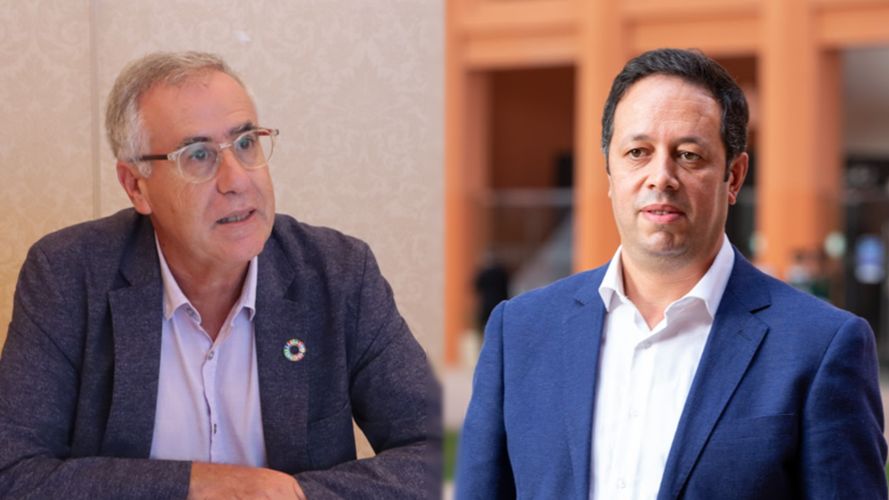
In 2026, Africa will loom large on the RD20 agenda. Not only will the annual conference be held that October in South Africa, but the Summer School program will take place that May at University Mohammed VI Polytechnic (UM6P) in Morocco.
Helping to guide the fourth iteration of the Summer School program is Dr. Abdelilah Slaoui, senior research director at the French National Centre for Scientific Research (CNRS).
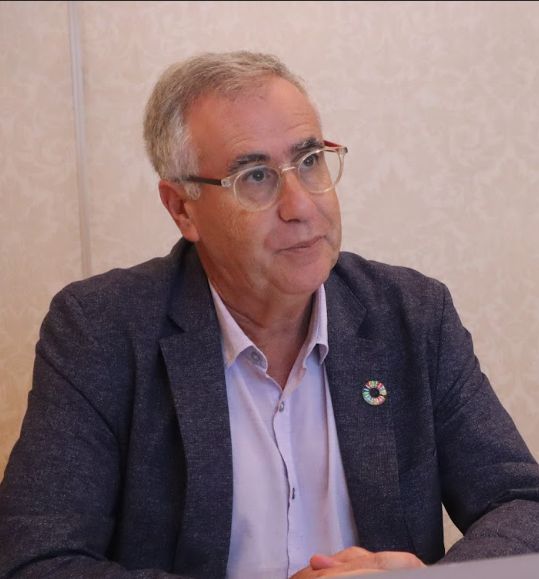
Slaoui is an expert in photovoltaics and renewable-energy technologies. In addition, he sits on the RD20 Action Committee. It was through this committee, he says, that the proposal to hold the 2026 Summer School in Morocco came in the first place.
“The Action Committee manages the overall strategy for RD20,” Slaoui says. “We discuss the scientific and technical topics that are strategic to each of the RD20 member institutions and try to identify common interests. For example, we identify together topics that we should tackle at the RD20 Conference as technical sessions or workshops.”
In that vein, Slaoui says, it is the committee that determines which RD20 taskforces should be in place, and likewise jointly decides on where to hold the Summer Schools. In essence, he says, the committee does more than just deal with the annual conference. It also comes up with the “tools and instruments,” as he describes them, to make RD20 function. Then it works with the RD20 secretariat to determine how to “make things happen” in terms of logistics.
As to his own role on the committee, Slaoui says his main function is to represent the views of his CNRS home institution as far as clean energies are considered. He explains, “(CNRS has) specific R&D priorities on energy, and so I want to see if these priorities are also shared by other RD20 institutions. If different, I try to understand why and then maybe learn something that I can bring back to (CNRS). Likewise, I also share our views that might be of interest to others.”
Among those interests is one for which Slaoui himself has been the leading proponent: the Summer School program. As he describes it, the program was established to bring together, for one week and in the same location, younger and early career researchers with senior experts who can deliver lectures and share their experience. The program contains projects on which the participants work together and allows them to share their views on specific “energy” issues and present solutions with a single voice.
The goal, Slaoui says, is “to provide them with the opportunity to think outside of the box.” The hope is that the young researchers will build a network of colleagues from different countries and regions, be exposed to new ideas and views, and have the opportunity to share their own for mutual benefit.
That the 2026 Summer School will be held in an African country is, in Slaoui’s view, extremely important, given its demographic trajectory.
“Africa is going to grow economically,” and so will its population, he noted. “Morocco, with its geographical position and long history, I believe, provides an appropriate door to Africa (for RD20).”
For one thing, he argues, many young students from several African countries are currently studying in Morocco at universities and engineering schools. As a matter of fact, University Mohammed VI Polytechnic, boasts of both a faculty and a student body drawn from more than 40 nationalities, many of them African. Furthermore, he adds, for logistical and other reasons, holding a summer school on the premises of UM6P will make it easier for interested young scholars from Africa to participate.
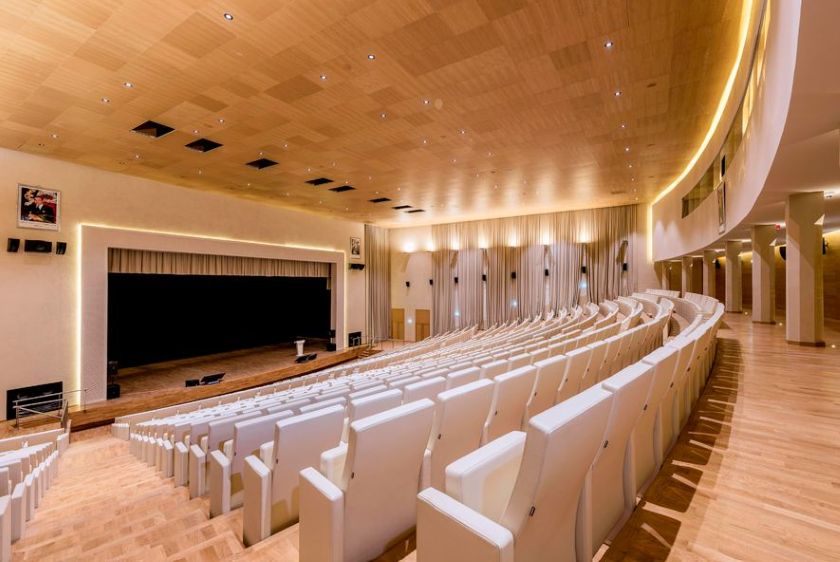
Facilities in UM6P where the 2026 Summer School will be held
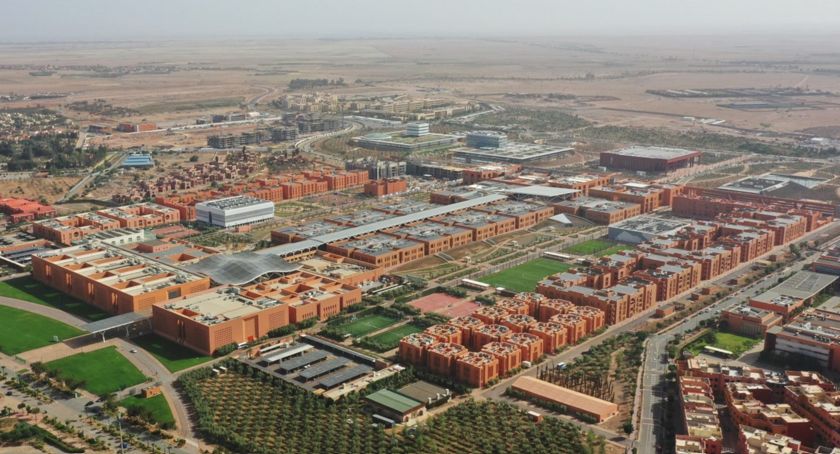
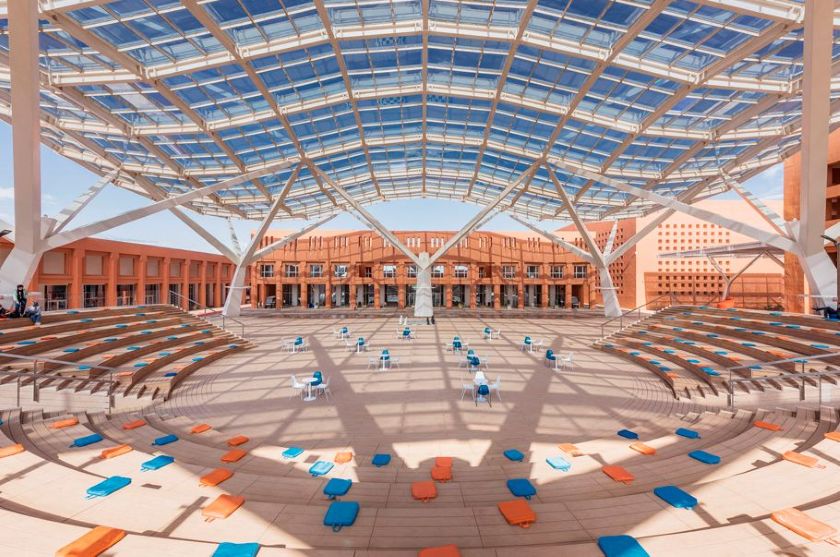
UM6P professor Abdessamad Faik, director of the university’s Laboratory of Inorganic Materials for Sustainable Energy Technologies (LIMSET), also points out that having the Summer School at his institution will help to highlight the work that is being done in Morocco and other African countries in the field of renewable energy. Although developed countries may be the main source of greenhouse gases, he points out, even industries in countries such as Morocco are pursuing the transition to renewable energy and decarbonization.
For example, Faik notes that Morocco holds around 70%-72% of global phosphate reserves, which are entirely controlled by the OCP Group (Office Chérifien des Phosphates) — the world’s largest exporter of phosphate and a key player in global fertilizer production. OCP is now seeking to add value to its products by decarbonizing its entire value chain, from mining to production and transport. Working on case studies of decarbonization efforts in industries such as this one might be a topic for the 2026 Summer School agenda, he suggests.
In addition to young scholars in Morocco, both Faik and Slaoui hope their peers elsewhere in Africa will find ways to attend the Summer School at UM6P. Faik’s university has been very active in the fields of clean energy and decarbonization, which Slaoui says makes it an excellent fit for the objectives of the RD20 initiative.
CNRS has had a connection with UM6P for some years, he says, and helping Faik and his colleagues to organize the Summer School is important, given the potential the university represents when it comes to training a next generation of researchers.
Furthermore, Slaoui argues, Morocco as a setting may be expected to help persuade participants from other countries that there is a need to consider local differences. For example, he points out, Morocco has a very dry climate. Water is at a premium, but some types of energy vectors, such as hydrogen, depend strongly on the availability of water to produce it. Local bottlenecks such as water scarcity therefore present challenges when it comes to thinking about the types of technologies that one might try to implement, he says.
Moreover, Faik stresses, the African venue of Morocco will provide scholars from around the continent with an opportunity to meet not only with experts from around the world, but also with one another.
“It is great to have the opportunity for collaboration between RD20 and African countries, but it will also help to bring about south-south collaborations among the African countries themselves,” he says. “Morocco can provide good examples of how we are implementing renewable energy, how we are decarbonizing industry and how we are developing green hydrogen and ammonia and so forth. But we can also learn also from other African countries about their best-case studies and scenarios, and then in collaboration with RD20 members, we can accelerate the developments taking place in Africa.”
Both Slaoui and Faik are convinced that the importance of an initiative like RD20 is working together and learning from one another. Says Slaoui: “What is critical today is that we all share the same global challenges. Energy transition, global warming … it is happening everywhere. North, south, wherever. It does not mean that there is a single solution for everyone, but we can learn from one another and then choose what is appropriate for our local situations. As we often say, ‘Think global, act local.’”
In this vein, Faik finds particular significance to holding the Summer School in Morocco. He says: “This will be a good opportunity to host many experts on their first visit to Africa or a place like Morocco. They can see what is going on here and what the reality (of development) is here. It will be like an icebreaker for the experts who come and can open the door for many future collaborations.”