

-
About
-
Outcomes
-
Conference
-
Events
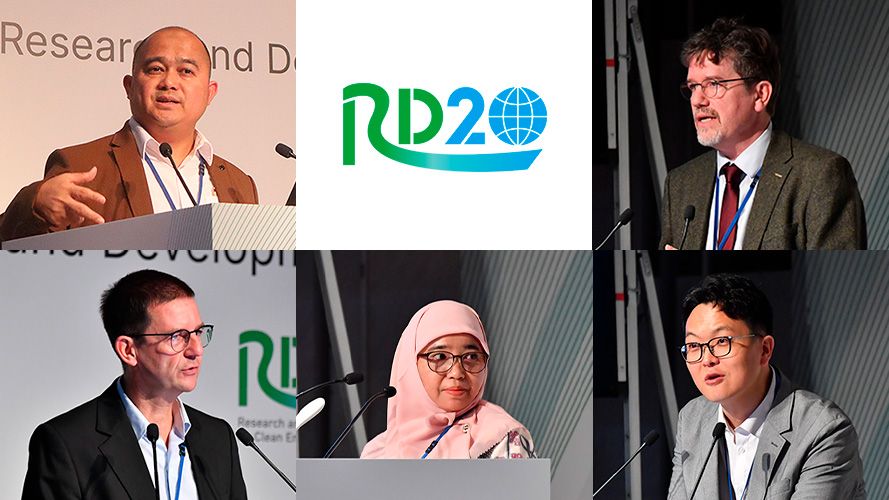
From Sept. 30 to Oct. 3, Japan’s National Institute of Advanced Industrial Science and Technology (AIST) hosted the 7th RD20 Conference in Tsukuba, just outside of Tokyo.
Over the first two days, the Technical Session brought together 24 researchers and experts from 11 countries to discuss carbon-neutral technologies and the potential for international collaboration. The session consisted of a plenary session and three thematic sessions: synthetic fuels, energy storage, and artificial intelligence (AI) and digitalization for energy.
To get a better idea of how the technical sessions were received, and what hopes the 7th RD20 Conference participants have for the future of the initiative, we spoke to five of the experts who made the trip to Tsukuba to give presentations and take part in the event.
“It’s really useful to come and hear perspectives from different countries, and to compare the experiences they’re having with the ones we’re having in the United Kingdom,” says Dr. Michael Colechin, founder and CEO of Cultivate Innovation Ltd.
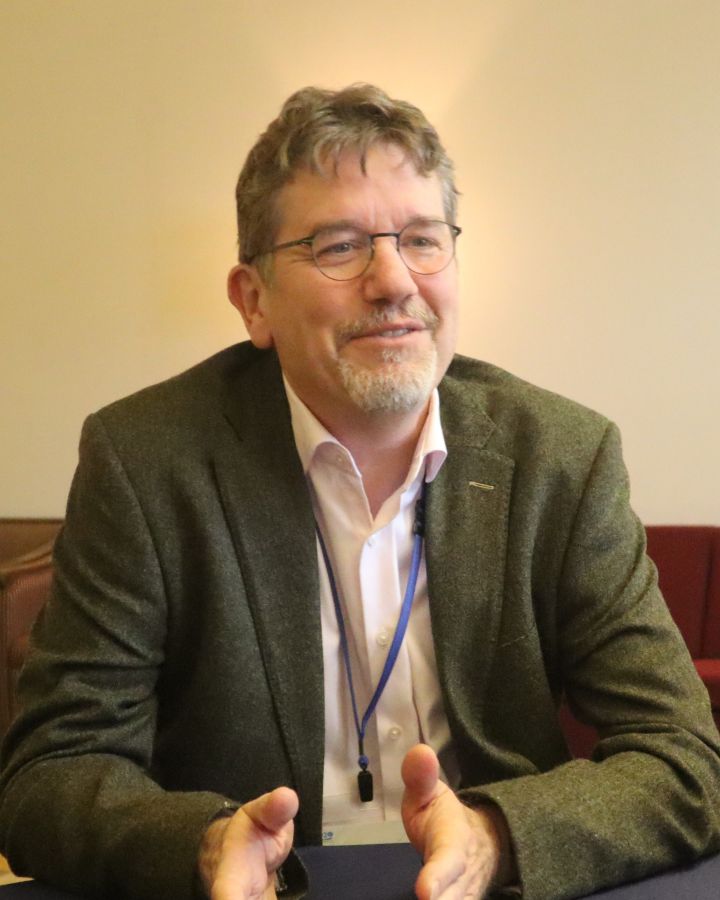
A combustion engineer by training and trade, Colechin found it enlightening to learn about how certain technologies and solutions are being developed in other countries. Of particular interest was learning about the differences relating to energy supply and demand.
“We can get very focused on the solution that is needed given our situation (in the U.K.). For me, yesterday (Sept. 30), the presentation from South Africa’s Council for Scientific and Industrial Research (CSIR) representative talking about what is going on in Africa (was an eye-opener). They do not have the resources to build out all the technologies, but this also means they sit as the potential taker of all that technology. That means they could shake the markets,” he said. “It’s really interesting to learn all of those perspectives, and that’s the best benefit of a meeting like this.”
“Each country has different potential when it comes to renewable energy,” observes Dr. Tata Sutardi, director of the Research Center for Energy Conversion Technology at Indonesia’s National Research and Innovation Agency (BRIN). “In my country, we have many potential sources of renewable energy, such as biomass, solar, geothermal and so forth. However, Indonesia is an archipelago comprising many islands. Implementing renewable energy presents great potential — as well as challenges — for my country.”
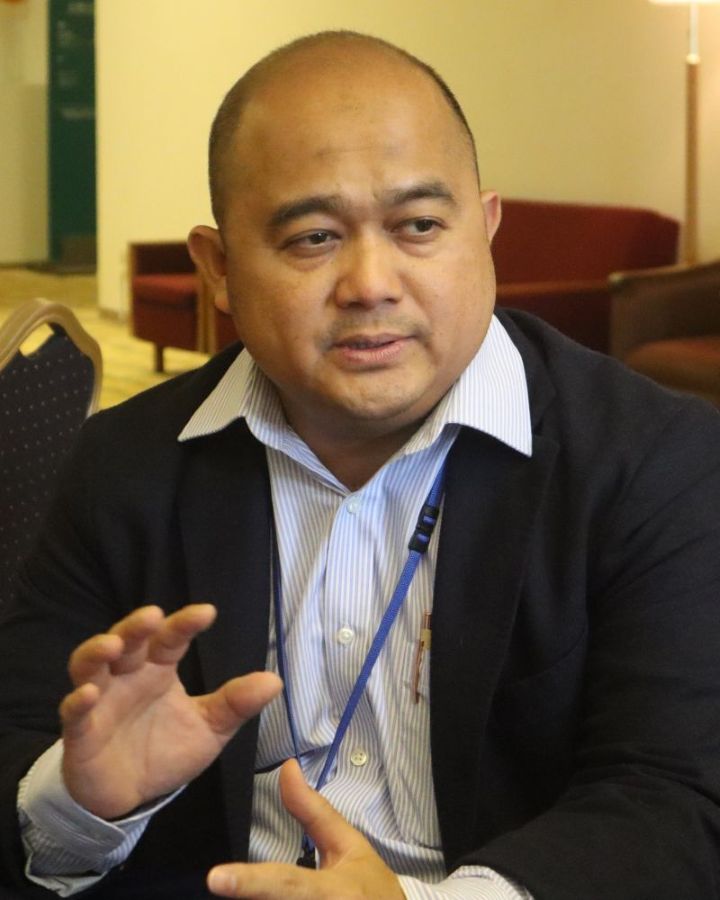
At a meeting like the RD20 Conference, Sutardi says, it is important to pursue collaborations with countries that are more advanced in renewable energy so Indonesia can develop further as well. The more that advanced countries can share, the less time it will take for Indonesia to develop.
Says Sutardi: “For example, at this moment we are collaborating with Sumitomo Heavy Industries, Ltd. (SHI) Japan on developing a biomass boiler. We have great potential in terms of empty fruit bunch (EFB) biomass, but it is difficult to burn in existing boilers. Therefore, we invite SHI to collaborate in developing a suitable boiler for EFB combustion. Collaborations like this will benefit each country, and so we need to encourage quicker implementation of renewable energy sources in our country. When you can work with others, you do not start your development from zero.”
For Dr. Emmanuel Baudrin, who among other roles wears the hat of director of the Research Network on Redox Flow batteries at the French National Centre for Scientific Research (CNRS), the technical session presentations reminded him that different technical approaches to solving renewable-energy problems are complementary.
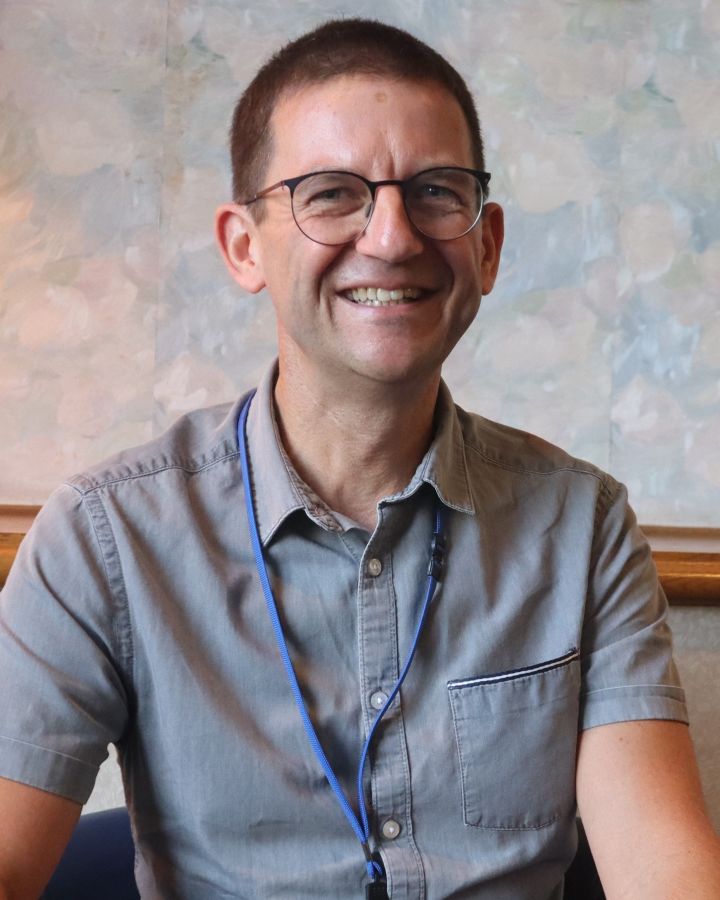
As a materials science and chemistry specialist working with batteries, for Baudrin learning about the work taking place in other fields was enlightening. But also came with a reminder: “(Whether you are working on batteries or in the hydrogen field), the presentations showed that (complementarity). It is important for us to understand that we are not competing. We are all doing something to find better ways to store energy.”
The very wide-ranging approach of the conference seemed to emphasize this for Baudrin. He adds: “It’s very different from other conferences. You are not here to sell your research — you are just here to say, ‘This could be interesting.’ It’s very good to come to such a conference.”
“Personally, this conference is very exciting,” says Dr. Euis Djubaedah, a senior researcher at Indonesia’s BRIN. “We are sharing knowledge and sharing information from our countries. I am learning a lot about conditions in other countries, and about technology to move things forward.”
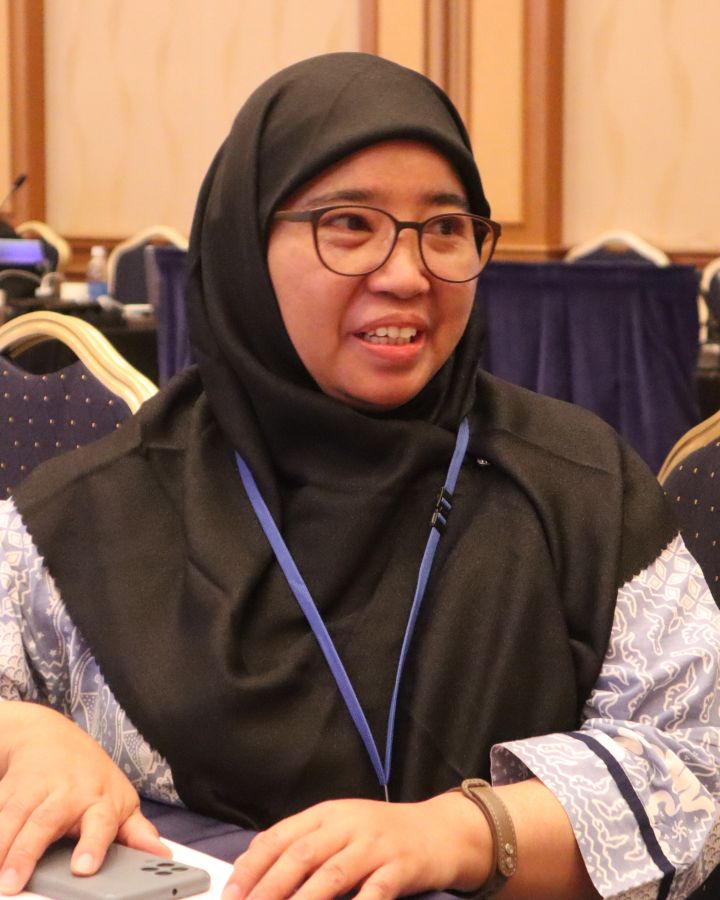
As seen in her coauthored presentation on energy storage development in Indonesia, Djubaedah has been concerned with her country’s urgent need for technological innovation in this area. Through the RD20 Conference, she realized there were opportunities for collaboration with institutions from other countries that are more advanced in this area. She hopes this can help Indonesia overcome the barriers it faces toward such development.
Djubaedah added that it was very useful to have an opportunity like the RD20 Conference to meet with representatives from other institutions to discuss how to achieve clean energy and energy transition in the future.
“I hope we can codesign models or pilot plans for new technologies that support clean energy. I truly believe we can make it happen together,” she said.
Though his training may be in materials science, Dr. Jehyun Lee of the Korea Institute of Energy Research (KIER) has focused his research more on computer modeling rather than working directly with physical materials.
“I feel like I’m in a minority, because I’m working with papers, while many people are involved with making and building things,” he says.
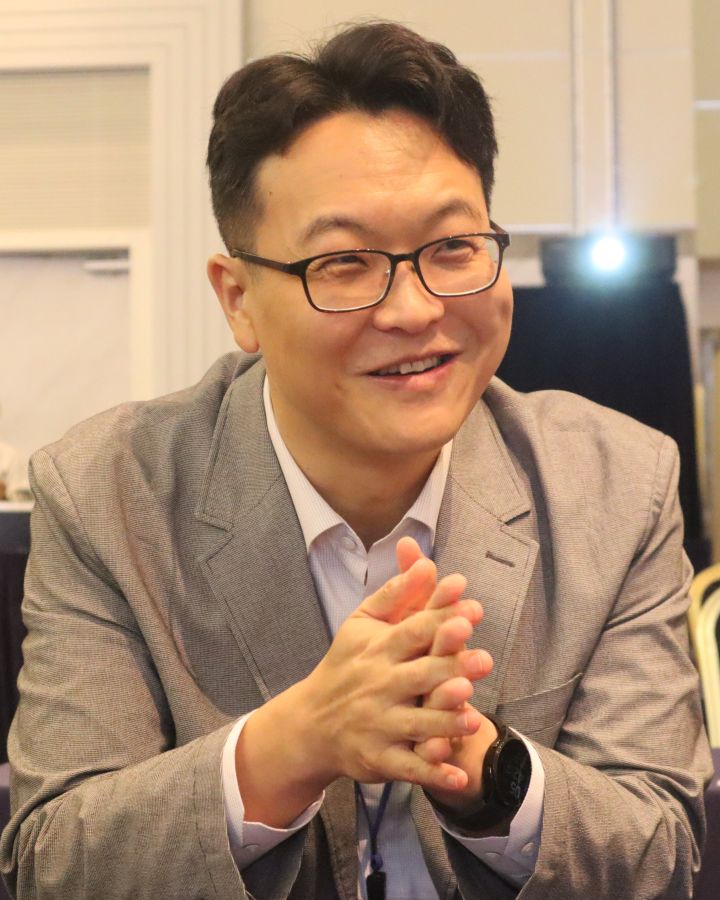
Accordingly, Lee had two separate though parallel views of the proceedings. As a materials scientist, he says, “It is very interesting that many people are doing similar things but in their own ways.” He notes, for example, the work that some of the presenters spoke of regarding solving the energy needs of buildings through renewables. Some of KIER’s researchers are also doing work in this area, but their approaches are quite different, so he plans to discuss insights he picked up at the RD20 Conference when he gets back.
At the same time, as someone now focused on modeling, Lee says he also realized his current area of study needs more recognition among researchers working in renewable energy.
“I work a lot with the Korean government these days, and they are interested in how it can reduce the amount of paperwork and such. I feel it would be very beneficial to all researchers. I was very proud to have the opportunity to deliver my presentation (on data-driven analysis).”
Shared by all these participants was the view that the RD20 Conference gave each the opportunity to learn about the work being done by researchers not only in different countries, but also in different fields and disciplines — with all focused on the energy transition goal. As the initiative moves forward, more advances and innovations may perhaps be expected in this area of carbon neutrality.